How to stay connected at Germany’s Christmas markets using eSIM: a seasoned traveller’s guide
Share this article
Help others discover this content
Stay connected at Germany’s Christmas markets
A seasoned traveller’s guide to eSIM
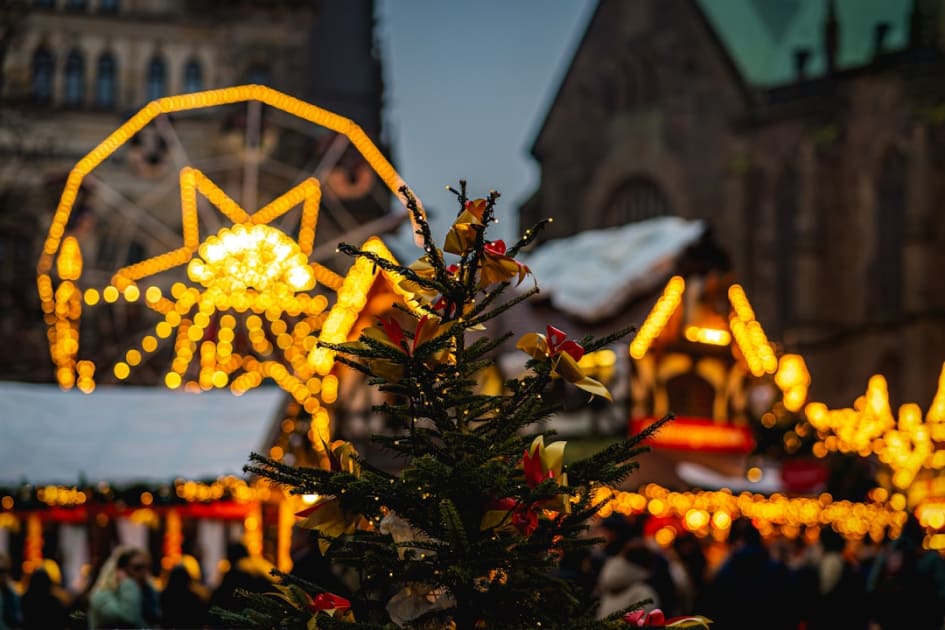
The scent of roasted almonds drifts through Cologne’s old town, and the air hums with carols and laughter. I’m shuffling past a wooden stall selling ornate nutcrackers, phone in hand, trying to send a photo to friends back in London. Suddenly, data slows to a crawl—everyone’s uploading selfies under the fairy lights.
It’s a classic festive scramble—thousands jostling for a signal at the heart of Germany’s Christmas magic. I’ve been there, mitten-clad, watching my phone buffer as the stalls behind me vanish into the evening fog. There’s a knack to staying connected at Europe’s busiest winter events—and these days, it starts with a digital SIM on your phone.
Quick Facts
- Avoid network congestion—stay online even in packed Christmas markets
- Activate your eSIM in under a minute and skip the SIM card queue
- Real-time data monitoring helps you stick to your festive travel budget
- No roaming bill surprises when sharing your Christmas memories
- 24/7 live chat support from Graba SIM if you run into trouble
Germany’s Christmas markets: festive crowds and connectivity quirks
If you haven’t yet wandered a German Christkindlmarkt, it’s hard to grasp the scale. Munich’s Marienplatz crams in over 3 million visitors each December. Nuremberg’s Christkindlesmarkt draws crowds thick enough that phone signal can drop by afternoon—especially on weekends. This isn’t just about posting on Instagram: last year, I lost my group outside Berlin’s Gendarmenmarkt because my WhatsApp lagged for nearly ten minutes. Local carrier networks—Deutsche Telekom, Vodafone, O2—get hammered by demand, and public Wi-Fi at these events rarely stretches beyond the main square (if it exists at all). Most frequent visitors know to expect patchy 4G in medieval city centres. Thick stone buildings and pop-up market huts block signals, while international roaming can mean sluggish data speeds and eye-watering charges. I’ve met travellers queueing at kiosks for local SIMs, only to find their phones don’t support them. That’s where the right eSIM steps up—quietly, efficiently, no fuss.
Why This Matters
Live event hotspots are notorious for mobile slowdowns—having an eSIM pre-loaded means you can keep tabs on your itinerary, book last-minute trains, and share moments in real time, even when the crowd’s surging.
Why eSIM makes sense for Germany’s winter markets
Physical SIM swaps on a frosty December night? No thanks. These days, I rely on an eSIM, or embedded SIM, to stay online from the first mug of Glühwein to the last bratwurst. With a service like Graba SIM, you choose your plan, scan a QR code, and activate in about 30 seconds—no paperclip needed.Here’s what makes a travel eSIM genuinely useful at Christmas markets:
I’ve also found that eSIM plans tend to dodge the heavy-handed throttling some roaming SIMs get—especially on major German carriers. You get local-level data speeds without the paperwork or prepaid top-up cards that stall a chilly evening out.
Find your best fit
Need a plan just for Germany, all of Europe, or even global coverage? Browse Graba SIM’s Germany eSIM plans or use the Plan Finder wizard to compare.
How to set up your eSIM for the festive season: a simple walkthrough
Setting up your eSIM before you hit the Christmas markets is straightforward. Here’s my personal step-by-step:
Get Connected
Ready before you touch down—browse Graba SIM’s festive eSIM options for Germany and Europe.
Tips from the ground: making the most of German markets
Local Tips
What’s the real difference? eSIM vs physical SIM and roaming
| Type | Setup time | Data speed | Typical cost (5GB, 7 days) | Ease of top-up | Support |
|---|---|---|---|---|---|
Virtual SIM (eSIM) | Under 1 minute | Local 4G/LTE | £6/$8/€7 | App/widget/online | 24/7 chat |
Physical local SIM | 10–20 mins (in shop) | Local 4G/LTE | £8–£15/$10–$20/€9–€17 | In shop/website | Shop hours only |
International roaming | Instant (no setup) | Usually throttled | £30–£50/$40–$70/€35–€60 | Operator app | Varies, often slow |
Scenarios: who benefits most from an eSIM at German Christmas markets?
Family trip to Nuremberg
Parents can keep track of teens roaming the stalls, using real-time location sharing—even when the crowd swells.
Solo visitor in Berlin
No need to hunt for a SIM shop after a late arrival. Activate eSIM in your hotel and check the U-Bahn schedule in seconds.
Frequent flyer with a packed itinerary
Switch between German and pan-European data plans on the go, without swapping cards or missing a connection.
Frequently Asked Questions
Get Connected
Check which eSIM plans best suit your winter travel—it only takes a minute.
Final Thoughts
Some trips are about switching off, but in the swirl of Germany’s Christmas markets, connection means more than just Instagram. It’s safe, practical—and yes, sharing those twinkling lights is half the fun. eSIM made my last festive trip smooth and spontaneous (even when I detoured to a tiny market near Bamberg at midnight). With the right plan, the only thing you’ll be queueing for is another Lebkuchen.
Ready to Get Connected?
Explore our eSIM plans and stay connected in 150+ countries with instant activation and competitive rates